
SELF-ADAPTIVE AND SENSORIAL COATINGS
SELF-ADAPTIVE AND SENSORIAL COATINGS
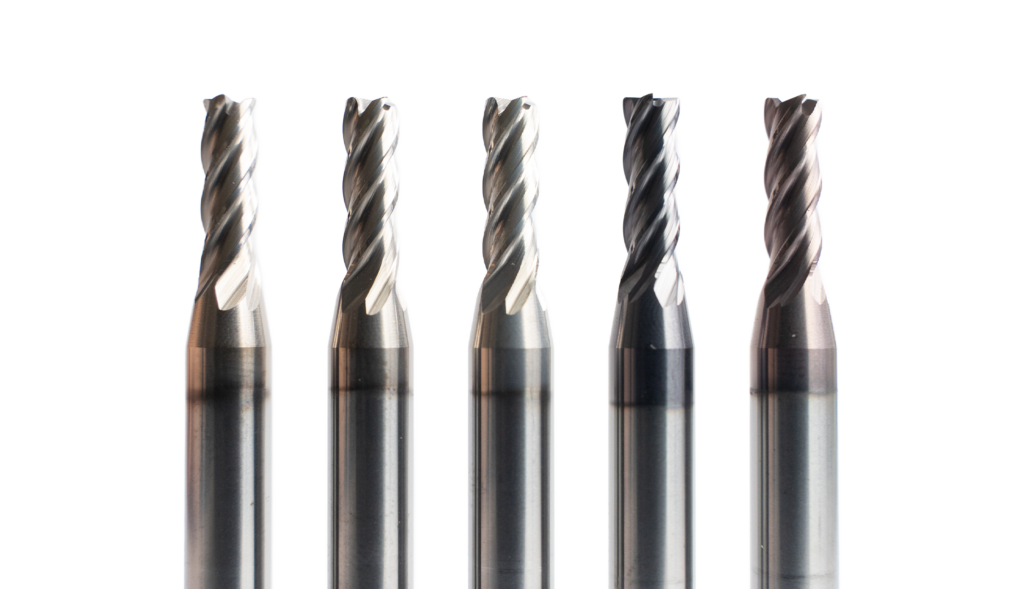
GOLDCUT (TiNAg) | MAXCUT (TiAlY)
Better surface finish quality and longer tool durability
DESCRIPTION
Family of multifunctional PVD coatings for chip-removal cutting tools, formulated to operate under conditions where conventional coatings (TiN, TiAlN) reach their performance limits. They combine high hardness and thermal stability with self-adaptive mechanisms triggered by the cutting process itself, which help reduce friction and cutting forces.
MAIN APPLICATIONS
- • Dry machining or minimum quantity lubrication (MQL)
- • Machining of hardened steels, Ni/Co superalloys and Ti alloys
- • High-speed milling, turning and drilling operations
- • Replacement of TiN/TiAlN coatings in applications where the cutting temperature exceeds 700 °C
- • Applications where reducing cutting fluid consumption is an environmental or process priority
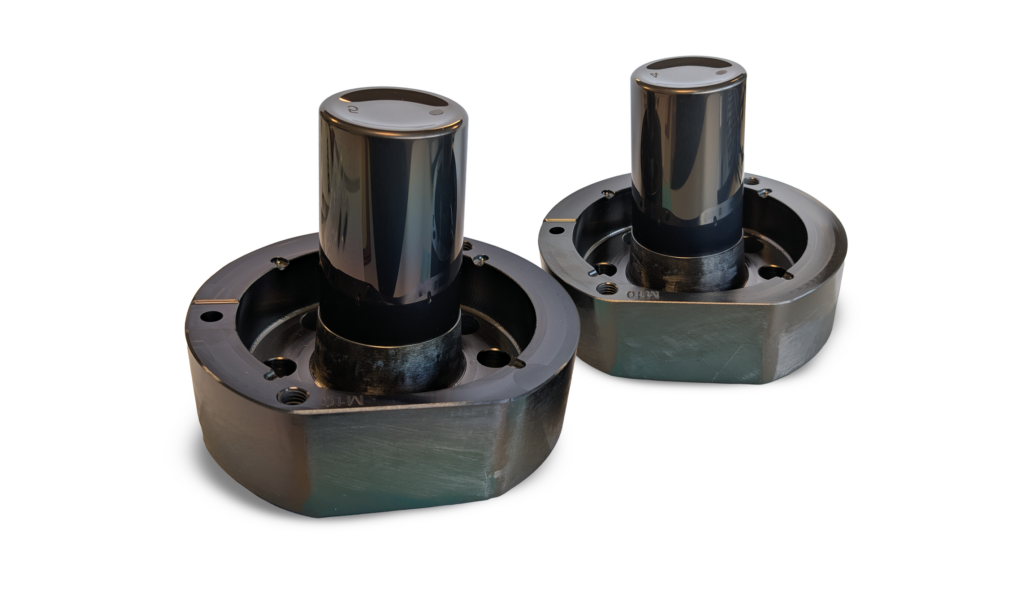
C-GLIDE (DLC) | MAXGLIDE (WSC)
Greater efficiency in plastic injection and mechanical forming processes
DESCRIPTION
Low-friction PVD coatings with self-adaptive behavior, optimized for tribological applications under harsh conditions:
A Diamond-Like Carbon (DLC) variant with high adhesion to the substrate, thermal stability superior to that of conventional DLC (500 °C), and a very low coefficient of friction (μ < 0.1) under dry sliding conditions.
WSC — a tungsten disulfide-based coating with added carbon, which ensures solid lubrication and low friction (μ ≈ 0.05–0.15) even under high loads.
Variante de Diamond-Like Carbon (DLC), com elevada adesão ao substrato, estabilidade térmica superior a um DLC convencional (500 °C) e coeficiente de atrito muito reduzido (μ < 0,1) em deslizamento seco.
WSC — revestimento à base de dissulfureto de tungsténio com adição de carbono, que assegura lubrificação sólida e baixo atrito (μ ≈ 0,05–0,15) mesmo sob cargas elevadas.
MAIN APPLICATIONS
- • Stamping and forming tools for high-strength steels and aluminum alloys
- • Injection mold components for glass-fiber reinforced or abrasive-filled plastics
- • Machining of light alloys (Al, Mg) prone to chip adhesion
- • Mechanical components subject to dry sliding (seals, pistons, etc.)
- • Replacement of conventional coatings in applications where galling, seizing, or premature wear occurs
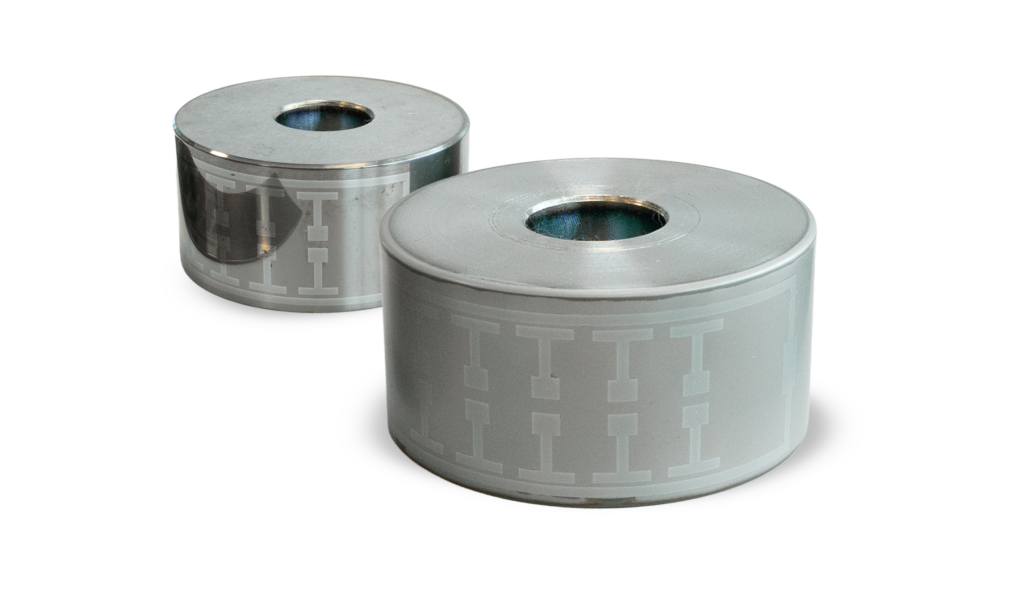
SENSOPRESS (CrN)
In-situ pressure variation monitoring for tools and components
DESCRIPTION
Functional PVD coating that integrates a CrN-based sensing layer with piezoresistive response, enabling in-situ and real-time measurement of pressure variations in tools and components.
Additionally, the sensing layer exhibits a measurable thermoresistive response, enabling simultaneous acquisition of pressure and contact temperature from a single coating architecture. Direct integration into the component, without the need for discrete external sensors, brings sensing closer to the actual load zone, with high spatial resolution and minimal mechanical interference in the process.
MAIN APPLICATIONS
- • Forming processes
- • Plastic injection
- • Support for process digitalization and Industry 4.0 strategies
- • Other applications where real-time mapping of contact pressure distribution is critical for process optimization, anomaly detection and predictive maintenance
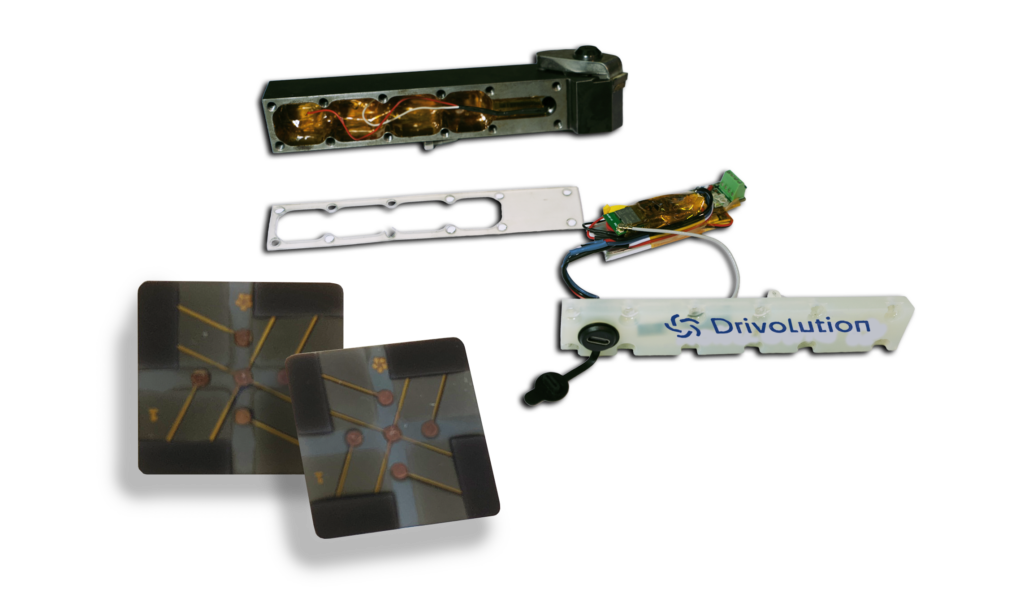
SENSOCUT (TiAlN)
In-situ temperature variation monitoring for cutting tools
DESCRIPTION
Multifunctional coating based on a multilayer architecture that combines tribological protection with in-situ temperature monitoring capability. The TiAlN layer provides high hardness and excellent oxidation resistance in demanding cutting operations, with stable tribological behavior at elevated temperatures. The integrated thermoresistive layer within the architecture enables temperature acquisition in the operating zone based on changes in electrical resistance, maintaining signal integrity even under high mechanical and thermal loads.
MAIN APPLICATIONS
- • Turning operations with difficult materials (superalloys, hardened steels, titanium alloys)
- • Support for predictive maintenance strategies and real-time optimization of cutting parameters
ADVANTAGES
Reduction of friction
Improved wear and oxidation resistance
Corrosion prevention
Non-stick coatings for smart production with pressure and temperature sensors
Discover our new coatings
Get in touch with our innovation team to improve the performance of your products
This coating was developed within the scope of PPS6/WP10. Self-adaptive, sensory and multifunctional coatings, part of the Drivolution Agenda, funded by the Recovery and Resilience Plan (PRR).
This Agenda aims to create a Factory of the Future capable of addressing the challenges underlying the energy transition and digital transformation in the automotive sector, enabling smart, sustainable, inclusive and resilient growth.

